1. The first time I saw it, I knew this brand was different
The day the first Emberglow sample arrived, everyone in our sample room gathered around.
It wasn't a bag that looked expensive. It was a bag that clearly had someone thinking behind it.
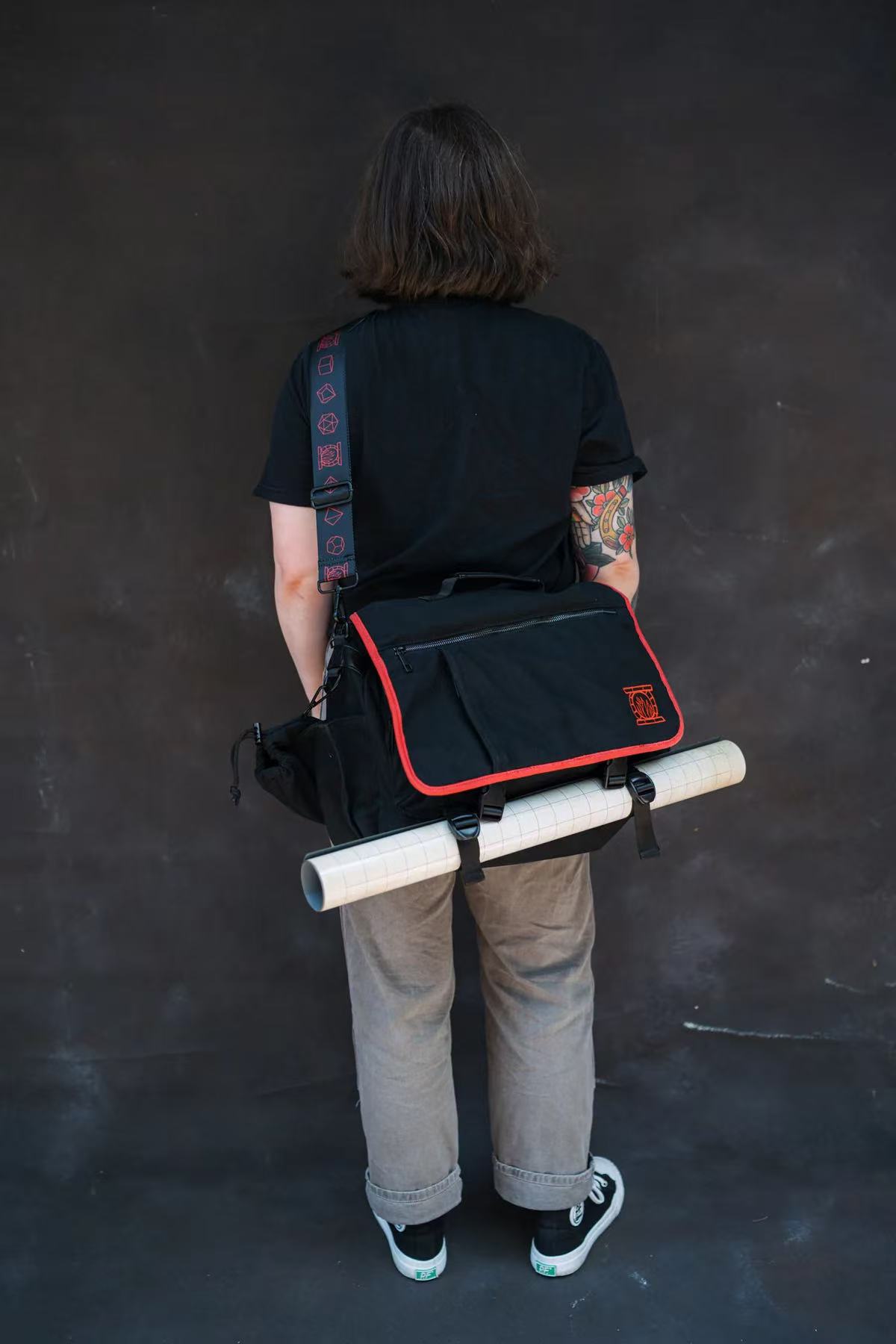
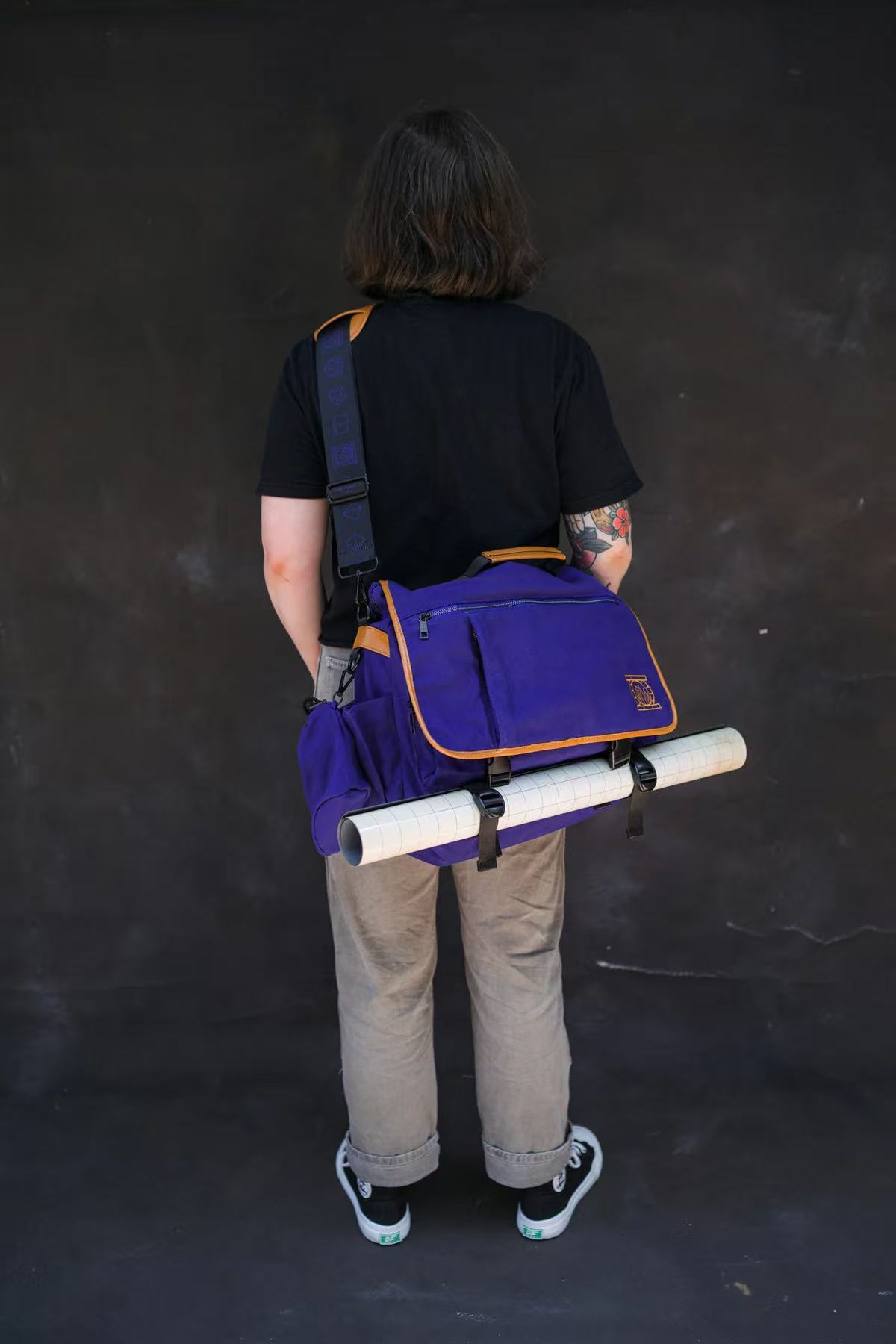
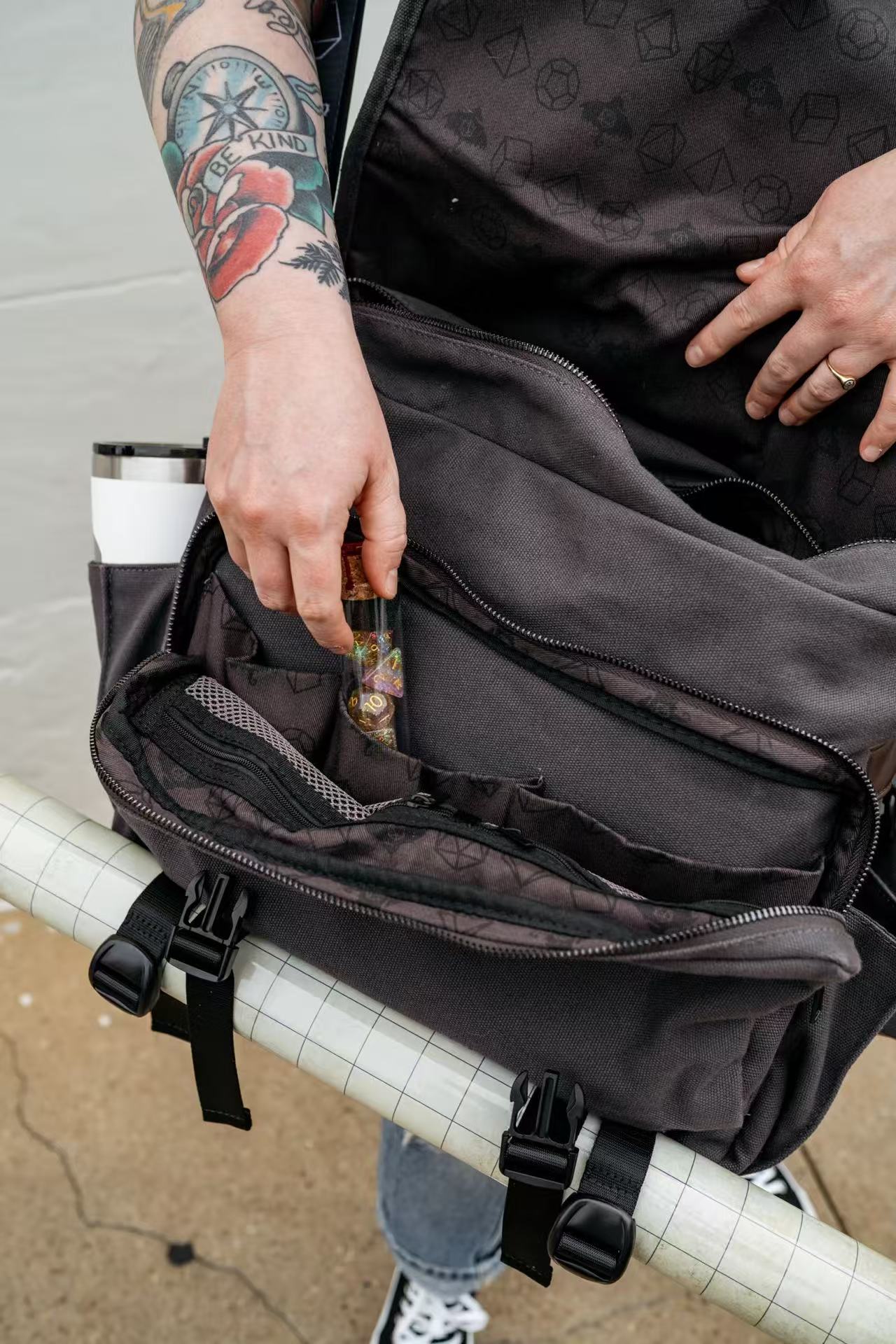
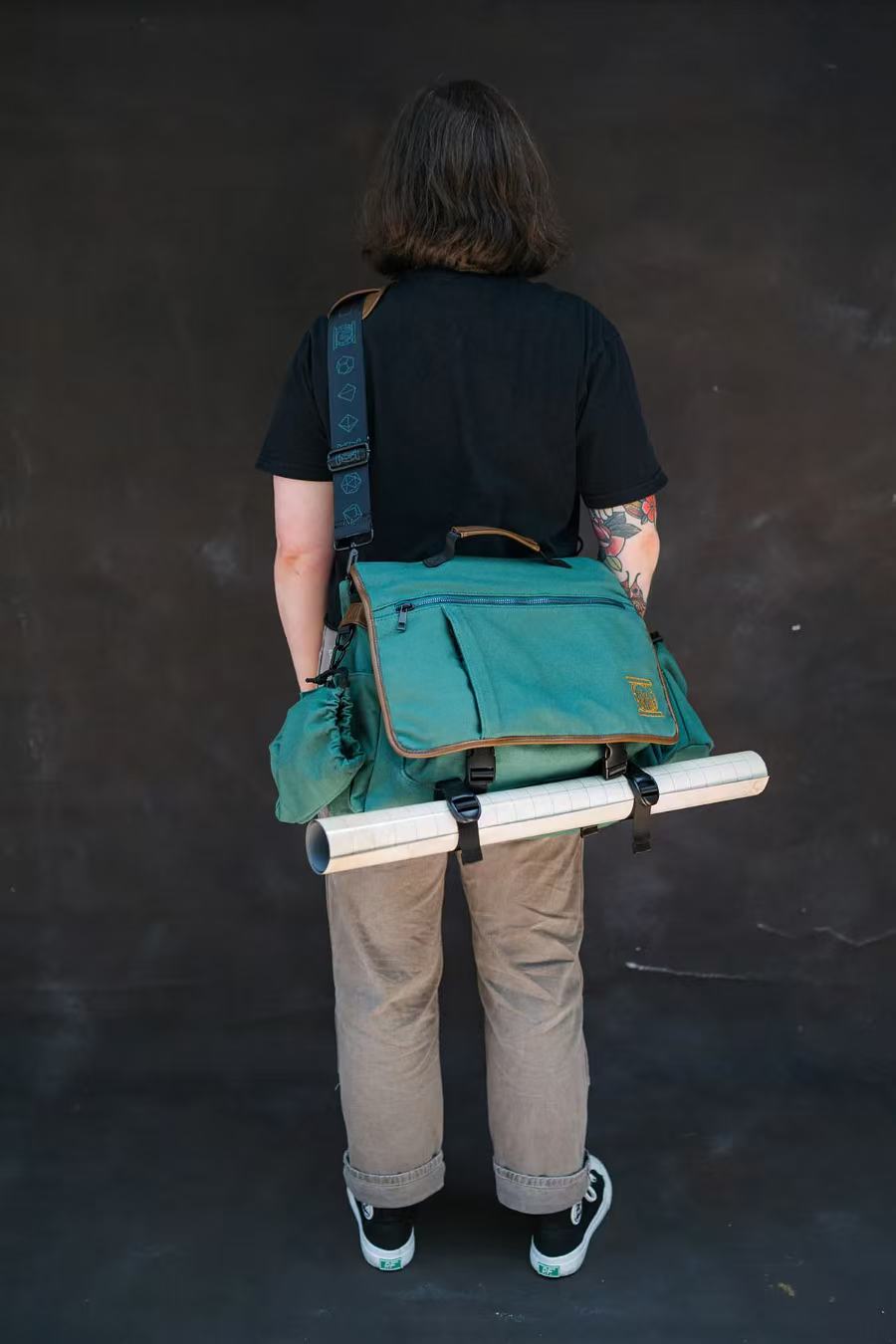
Deep grey canvas, pure black, finished with a single line of orange piping — restrained, and yet recognizable from across a room. The strap carried a rhythm of geometric shapes: triangles, rings, squares and lines repeating like a code woven into the webbing. At the bottom, straps held a gridded drafting tube firmly against the body, its off-white surface cutting a clean horizontal line across the dark canvas.
What stayed with me most was the emblem: a flame, held inside an angular frame. Quiet, but warm.
Emberglow — the ember has not gone out, the glow remains.
Later I understood: almost every detail on this bag tells the same story. It's not about putting a logo on a bag. It's about stitching a character into it.
2. Their "trendiness" has logic behind it
We've made bags for many brands. We've seen too many designs that simply chase the trend — pile on whatever is hot, and it looks good for three days.
Emberglow isn't that.
Their sense of style comes from restraint and order:
- Color by subtraction. Grey and black form the base; orange appears only on the piping, the emblem and the strap print — one accent color, used exactly where it belongs.
- The pattern has rules. The geometric elements on the strap aren't pasted on at random; they're arranged with rhythm, so they shift and flow as you walk. That sense of pattern in motion is something I had rarely seen on webbing.
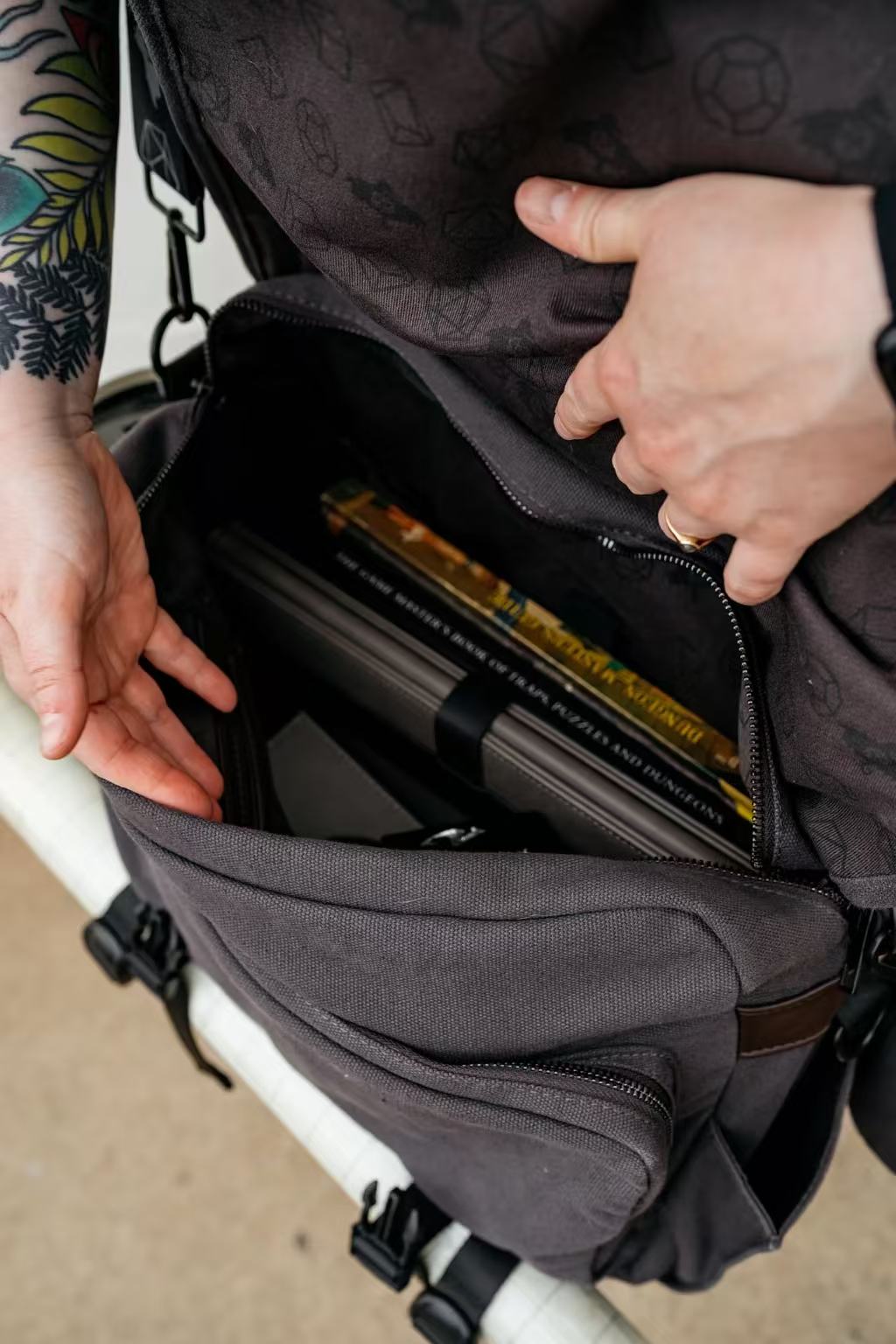
- Function hides inside the design. The front zipper pocket, the top grab handle, the drafting-tube straps at the base — none of them are decoration. They solve real problems. The tube straps especially: they don't break the bag's silhouette, they become part of it.
Turning function into form — that is what design can do.
The lookbook shot against a concrete wall — the tattoos, the relaxed posture, the industrial grain of the ground — says one thing: this bag belongs to the street, to real life, to the person who carries it to work, to the drafting table, to the day.
3. Three things I'm most grateful for
1. Their insistence on quality pushed us to get better
The Emberglow team inspects samples differently. They don't just ask "does it look good" — they turn it inside out to read the stitching, they tug at the strap joints, they ask, "this point carries weight every day. What does it look like after a year?"
Because of those questions, we moved more operations into double-stitch reinforcement and redesigned the load-bearing points again and again. They weren't nitpicking. They were raising our standard to a level I didn't think we could reach.
2. Communication is clean
Every round of feedback is specific, clear and actionable — never "something feels off," but "this curve can come in two millimeters" or "this color shift reads warm in natural light."
Clean requirements produce clean product. Working with a team like this is efficient — and genuinely enjoyable.
3. They respect manufacturing
They understand exactly how many hands stand between a drawing and a finished bag. They listen when we say "changing the process this way will make it more durable," and they will overturn their own earlier idea for a better structural solution.
Respect goes both ways. That is what I feel most in this partnership.
4. What I learned from Emberglow
Working with them, I often feel I'm not just making bags for a brand — I'm taking a course.
Lesson one: design is subtraction, not addition. We used to think one more pocket or one more zipper was automatically a plus. Emberglow taught me that good design knows what to leave out. Less is more is easy to say and hard to hold to.
Lesson two: a brand isn't a logo — it's the repetition of every detail. Orange appears in only three places on the bag. The emblem appears in only two. And precisely because of that consistency, you can close your eyes and still see it. That is a brand.
Lesson three: real style comes from understanding the user. Every design decision comes back to one question: how will the person carrying this actually use it? That plain starting point outlasts any trend.
5. In closing
I'm proud that we've come this far with Emberglow.
I love their design. I love how exacting they are. I love the care they put into every stitch, every line of piping, every color decision. Working with them has pushed our craft forward and opened our eyes a little wider.
If our factory gave Emberglow a pair of reliable hands, Emberglow gave us a pair of eyes that understand design better.
Here's to the next bag, the next challenge, and the next day we turn an idea into something real.
Emberglow — it's been an honor.